
Visit Our Location


Can Invisalign change how you sing or affect the wind instruments you play?
Posted On September 18, 2026
| Quick answer |
|---|
| Invisalign may cause a brief, minor change in singing diction or wind-instrument tone during the first days of each new tray, but the thin, smooth aligners allow most musicians to adapt within one to two weeks and regain full control. |
| 1–2 weeks | 23–24 hrs | 2,000+ | 20+ years |
|---|---|---|---|
| Typical adaptation window per tray | Recommended daily aligner wear | Invisalign cases treated in La Jolla | Serving the La Jolla community |
Key takeaways
- Any change to your voice or embouchure is usually subtle and temporary, resolving as your tongue and lips adjust.
- Wearing aligners 23 to 24 hours a day gives your mouth consistent conditions, which speeds adaptation for performers.
- Smooth aligner surfaces are gentler on lips than metal brackets, an advantage for reed, brass, and flute players.
- Warm-ups and steady practice during each new tray rebuild tone and diction faster.
- A Diamond Invisalign Provider can fine-tune attachments and fit if a performer notices persistent interference.
Quick Answer: Can Invisalign Change Your Singing or Wind Playing?
Yes, but only slightly and only for a short time. When you place a fresh set of clear aligners, your tongue, lips, and airflow briefly adjust to a new surface, which can nudge diction or tone. Most singers and instrumentalists regain full command within one to two weeks.
The short version for musicians and vocalists
The aligners are thin, custom-molded shells that hug your teeth. Because they add very little bulk, the effect on resonance and articulation is modest compared with fixed metal hardware. A prospective clinical study on speech during clear aligner therapy found that most articulation changes were mild and improved over the treatment window, as reported in this research on speech performance.
Why any adjustment is usually temporary
Your mouth is a fast learner. The tongue and lips recalibrate around new surfaces the same way they adapt to a dental filling or a new reed. Consistent wear keeps those conditions stable so your muscle memory settles quickly. If you want the behind-the-scenes view, here’s how Invisalign quietly works wonders without disrupting daily life.
How Invisalign Interacts With Your Mouth, Tongue, and Airflow
Invisalign influences sound at the exact spot where tone is born: the meeting point of tongue, lips, teeth, and moving air. Understanding that interplay explains why changes feel noticeable at first yet fade fast.
The role of the tongue, lips, and teeth in tone production
Precise sound depends on where your tongue touches and how your lips shape air. Singers rely on tongue tip placement for crisp consonants, while wind players build an embouchure from lip tension and air direction. Because the tongue is central to both speech and swallowing, its adaptability is well documented in studies of tongue posture and function, including this review of tongue habits and therapy.
What the thin aligner surface does to your embouchure
The trays cover the front and biting surfaces of your teeth with a smooth, low-profile layer. For most players, this feels like a slightly different backdrop for the lips rather than a barrier. The polished contour avoids the snags and lip abrasion associated with brackets, so your embouchure has a clean surface to seal against.
Speech and articulation findings from clinical research
Research on adults wearing clear trays shows the biggest articulation shifts appear with sibilant and dental sounds early on, then diminish as patients acclimate. The same speech performance study confirms that speech normalizes over time, which mirrors what patients at La Jolla Family Smile Design report.
Singing With Invisalign: What Vocalists Should Expect
Vocalists should expect a faint lisp or altered feel on certain consonants for a few days, then a swift return to full clarity. The pitch and power of your voice come from your vocal folds and breath support, which the trays do not touch, so your core instrument stays intact.
Consonants, diction, and the early adjustment window
Sounds like S, T, D, and Z form near the front teeth, so those are the ones you may notice first. Reading lyrics aloud, practicing tongue twisters, and singing scales help retrain placement quickly. Many singers say a single focused practice session smooths out most of the difference.
Practical tips for a smoother return to full vocal control
| 1 | Speak before you sing. Read text aloud for a few minutes so your tongue relocates its landmarks before you add melody. |
| 2 | Target tricky consonants Drill S and T sounds slowly, then at tempo, to rebuild crisp diction on demand. |
| 3 | Record and compare Capture short takes so you can hear real progress instead of guessing. |
| 4 | Stay hydrated You can sip water and stay refreshed while wearing your aligners during long sessions. |
Why wearing your aligners 23 to 24 hours a day speeds adaptation
Consistent wear keeps your mouth in one stable configuration, so your muscle memory does not restart. Wearing your trays 23 to 24 hours a day gives your tongue and lips uninterrupted practice, which is exactly why full-time wear leads to faster comfort. It also keeps treatment on schedule. For more everyday context, see how Invisalign blends seamlessly into your daily routine.
| A note from your provider |
|---|
| “Singers and wind players often worry they will lose their edge, but the mouth adapts remarkably well. Wear the trays 23 to 24 hours a day, warm up as usual, and within a week or two most performers forget the aligners are there,” says Jaime Breziner, DDS, a Diamond Invisalign Provider at La Jolla Family Smile Design. |
Playing Wind Instruments With Invisalign
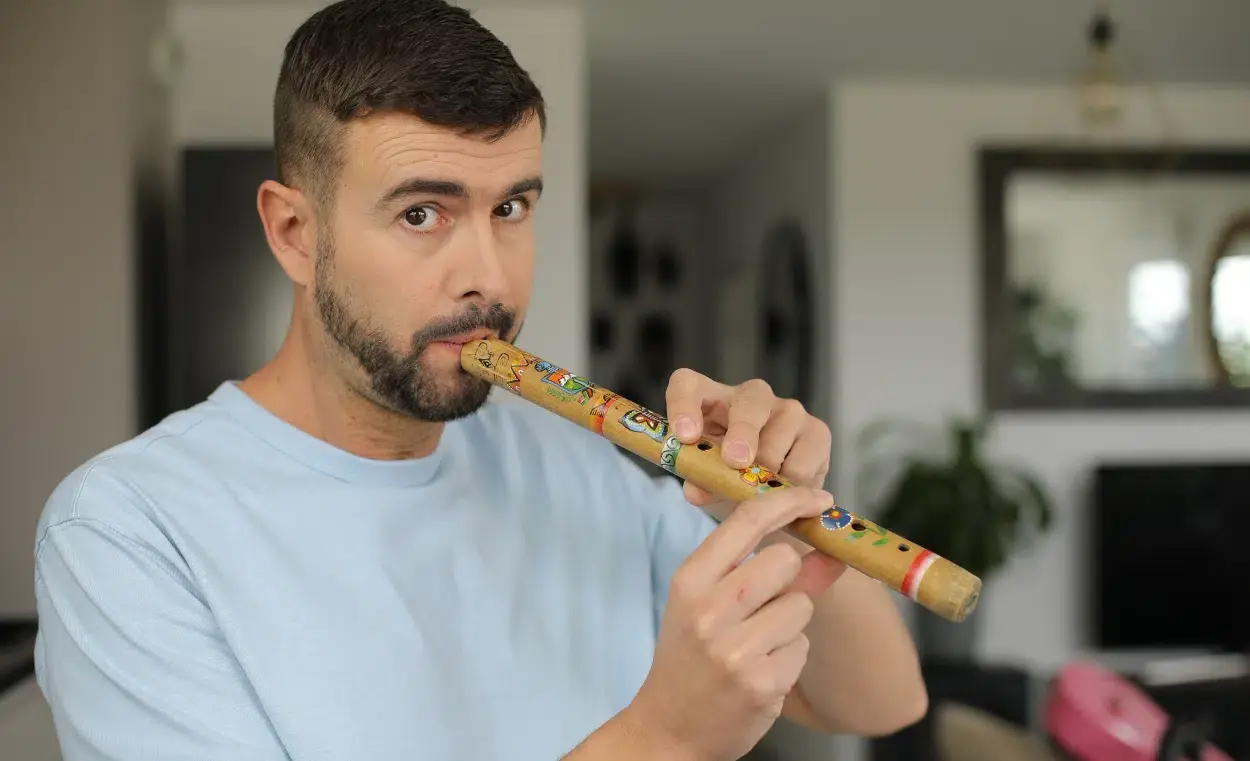
You can play wind instruments with Invisalign, and many musicians do so throughout treatment. Each instrument family loads the lips and airflow differently, so the adjustment feels slightly different depending on what you play. Wind playing itself shapes the orofacial muscles over time, as detailed in this study on wind instruments and the orofacial system.
Reed instruments (clarinet, saxophone, oboe, bassoon)
Single and double reed players rest the lower lip against the lower teeth or cushion the reed with both lips. The smooth tray gives a consistent surface to seal against, though double reed players like oboists and bassoonists may need a couple of extra practice sessions to refine air pressure and lip cushioning.
Brass instruments and mouthpiece pressure
Brass players buzz the lips into a mouthpiece, and the aligners sit behind that contact zone. Because the smooth shell reduces the risk of lip cuts common with brackets, brass musicians often find the transition comfortable. Ease back into high-register passages after a fresh tray to let your lips re-anchor.
Flute and the aperture across the lips
Flutists direct a narrow air stream across the embouchure hole, so precise lip shaping matters most. The trays change the feel behind the lips only slightly, and short aperture and long-tone exercises restore focus quickly.
How the orofacial system adapts to wind playing
Playing regularly conditions the muscles around your mouth, and that trained control helps you adapt to any small surface change. Professional wind musicians already manage demands on their teeth and lips, as described in this overview of oral health challenges for wind players, so a smooth aligner is a manageable adjustment.
Invisalign vs. Traditional Braces for Musicians
For most performers, clear aligners are the gentler option because there are no metal edges to cut the lips. That single difference matters enormously for players whose lips press against teeth for hours.
Why the smooth aligner surface is gentler on lips than brackets
Metal brackets can abrade the inside of the lips during buzzing or reed work, sometimes causing sores that interrupt practice. The seamless tray removes that friction, so reed and brass players in particular tend to prefer it.
| Use these | Avoid these |
|---|---|
|
|
Removability, comfort, and daily practice routines
Clear aligners fit around a busy performance calendar. To see why so many adults choose them, read why Invisalign is the preferred choice for adults and 5 things nobody tells you about Invisalign clear aligners.
Adaptation Timeline and Practice Tips for Performers
Most performers follow a predictable arc: a little awkwardness on day one, clear improvement by mid-week, and near-normal control by the end of the tray cycle. Knowing that pattern keeps you calm before a performance.
Week-by-week: what most players notice
| Time frame | What performers typically notice |
|---|---|
| Days 1 to 3 | Slight change in diction or tone with a fresh tray; new pressure feels present |
| Days 4 to 7 | Consonants sharpen, and embouchure control returns; pressure eases |
| Week 2 | Most players perform without thinking about the trays |
| Each new tray | A brief, milder repeat that resolves faster as you gain experience |
Warm-up strategies to rebuild tone and control
Begin every session with long tones, lip slurs, or sustained vowels to reconnect breath and placement. Slow scales followed by familiar passages help your muscles recalibrate before demanding material. A short, consistent warm-up beats a long, occasional one, and pairs well with the 3-minute Invisalign morning routine.
Eating and drinking while wearing your aligners during long rehearsals
Long rehearsals are easier because you can eat and drink while wearing your aligners, keeping your energy up without pausing to store your trays. Staying nourished and hydrated supports breath control and stamina across back-to-back sessions, and it helps you keep to the 23- to 24-hour wear goal that drives results.
When to Talk to Your La Jolla Dentist
Reach out if a tone problem or lip irritation lasts beyond the usual adjustment window rather than fading within two weeks. A quick review can identify whether an edge or attachment needs attention.
Signs your fit or attachments may need review
- A rough spot that keeps catching your lip during play
- Persistent difficulty with the same passage after full adaptation
- A tray that does not seat fully or feels loose
- Diction that does not settle after two weeks of consistent wear
How personalized treatment supports performers
At La Jolla Family Smile Design, treatment is mapped to your goals, including your performance schedule. Our La Jolla dentists, Dr. Breziner, Dr. Bloch, Dr. Kandinov, and Dr. Abrahams, have served the community for over twenty years, offering complimentary Invisalign consults, bilingual English and Spanish staff, in-office dental plans, and emergency care. Every operatory even has HDTVs and headphones so you can relax during visits. Explore our Invisalign care and full services, learn about Dr. Jaime Breziner, ask about the Annual Dental Care Plan, or contact us to begin. You can also read our reviews or leave us a review.
Meet Our La Jolla Dentists
La Jolla dentists Dr. Breziner, Dr. Bloch, Dr. Kandinov, and Dr. Abrahams have proudly served this community for over twenty years. Our long-term staff and loyal patients reflect a steady commitment to exceptional care, from routine hygiene to full smile redesigns. Every patient receives personalized attention across a comprehensive list of general and cosmetic services, including cleanings, fillings, root canals, implants, and dentures, with healthy smiles always the first priority. As a Diamond Invisalign Provider with a Doctor of Dental Surgery from Loma Linda University, our lead clinician has treated more than two thousand aligner cases and teaches fellow dentists across the region. You can learn more about Dr. Jaime Breziner. Patients also enjoy HDTVs and headphones in every operatory. For directions, use our map link.
Find us
Map/directions: https://maps.app.goo.gl/A8HHgmxYhr1y6nD88?output=embed
Frequently Asked Questions
It may cause a brief change to your diction on front-of-mouth consonants like S and T during the first few days of a new tray, but your pitch, power, and tone come from your vocal folds and breath, which the trays do not touch. Most singers regain full clarity within one to two weeks by warming up and practicing consistently.
Yes. Reed, brass, and flute players can all perform with clear aligners. The smooth, thin trays sit behind or near your lip contact and give a clean surface to seal against. Reed and brass players especially appreciate that there are no metal edges to cut the lips, and a few focused practice sessions restore tone and embouchure control.
Most wind players notice slight differences for the first three days, clear improvement by mid-week, and near-normal control by the end of the tray cycle. Each subsequent tray brings a milder, faster adjustment. Long tones, lip slurs, and steady practice help your lips and tongue re-anchor quickly.
For many performers, clear aligners are gentler because there are no metal brackets to abrade the lips during buzzing or reed work, which can cause sores that interrupt practice. The seamless tray surface reduces friction, making it a comfortable choice for reed, brass, and flute players who press their lips against their teeth for long periods.
You may notice a faint lisp on dental and sibilant sounds early on, since these form near the front teeth. Clinical research on speech during clear aligner therapy shows these effects are mild and improve over time. Reading aloud and drilling tricky consonants speeds your return to crisp diction.
Wear your aligners 23 to 24 hours a day. Consistent full-time wear keeps your mouth in one stable configuration, so your tongue and lips do not have to restart their adaptation, which speeds comfort and keeps your treatment on schedule. You can eat and drink while wearing your aligners during long rehearsals to stay nourished and hydrated.
Remember: Any change to your singing or wind playing from clear aligners is usually mild and short-lived, and consistent wear at 23 to 24 hours a day is your fastest path back to full control.
Disclaimer: This article is for general information only and is not a substitute for personalized dental advice. Individual results vary. Please consult a qualified dental professional at La Jolla Family Smile Design about your specific needs.