
Visit Our Location




TMJ Treatment in La Jolla

Problems affecting the temporomandibular joint (TMJ) — the small joint connecting the jaw to the skull — can lead to chronic headaches, facial pain, difficulty opening the mouth and dental problems. Fortunately, the team at La Jolla Family Smile Design has vast experience in the diagnosis and treatment of TMJ problems.
If you are experiencing pain or other symptoms affecting your jaw joint, we want to help. With our clinical expertise and advanced diagnostic technology, we will ensure you receive the necessary care for your TMJ issues.
Understanding TMJ Disorder (TMD)
The TMJ is located on both sides of the jaw. It is a “ball-and-socket” joint, with a disc of cartilage that cushions the head of the jawbone and the skull. The TMJ joint may be small, but it is extremely complex and plays a crucial role in many important daily functions. Your TMJ works with the surrounding muscles and ligaments to control your ability to open and close your mouth, chew, speak and swallow.
TMD Symptoms
Traumatic injuries (such as a direct blow to the jaw), arthritis or even habitual involuntary teeth grinding or clenching can damage the joint itself or the ligaments that work with the joint. When these structures are out of alignment, the following symptoms commonly occur:
- A clicking, popping or grating noise when opening the mouth
- Difficulty opening the mouth wide
- Difficulty or pain when chewing
- Headaches
- Pain behind the eyes
- Lockjaw
- Tooth sensitivity or toothaches
- Earaches or ringing in the ears
- Dizziness
- Bite problems
If you are affected by these symptoms, we encourage you to schedule an evaluation with our team. One of our dentists will ask you about the nature of your symptoms, take a medical and dental health history and assess all of the joints and muscles of your TMJ to gain further insight into the problem. We will also use advanced diagnostic technology to confirm or rule out TMJ disorder.
Treating TMJ Disorder
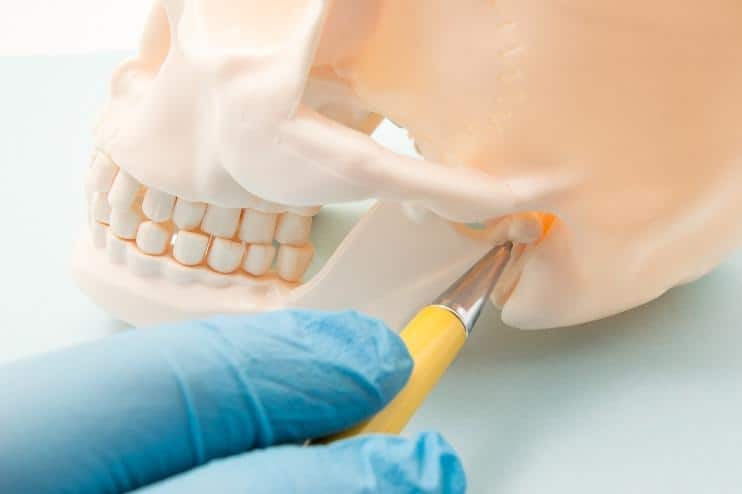
Treatment for TMJ disorder is highly individualized to the circumstances of the problem. Depending on the root cause of your TMJ problems and the severity of the issue, our dentists may recommend a number of different techniques and technologies.
Our dentists usually start by suggesting simple lifestyle changes, such as switching to a soft foods-only diet and practicing relaxation exercises to control tension in the jaw. Taking over-the-counter pain medication or muscle relaxers and applying hot or cold compresses can soothe discomfort. Stress management techniques can help minimize stress that contributes to involuntary teeth grinding or clenching.
Oral Appliances
If pain and symptoms persist, we can recommend other therapies based on the suspected cause. Often oral appliances, such as a mouth guard to protect the teeth from nighttime grinding or clenching or a splint to move the jaw forward and relieve pressure, are useful. In cases where TMJ problems have changed the way the upper and lower teeth fit together, orthodontics or reshaping of the teeth may be suggested.
Surgery is reserved for the most advanced cases where other treatment modalities fail and the joint has severely degraded or dislocated.
TMJ Causes and Risk Factors
TMJ dysfunction is known for causing disruptive symptoms that make it difficult for patients to go about their daily lives. The condition is often the result of several factors, as opposed to just one main cause. These can include:
- Injuries to the jaw
- Bruxism
- Misaligned bite
- Stress
Exams and Tests
A dental exam can help our experts determine the cause of your TMJ pain. X-rays may be taken to help identify bite misalignment and observe the structures surrounding the joints in the jaw. Gently pressure may be applied to your face and jaw to locate tender areas. You may also be required to open and close your mouth so that our doctors can observe specific symptoms, such as popping noises, as well as the range of motion in your jaw.
FAQs
There are a number of in-office treatment options available to patients with TMJ dysfunction, but your exact treatment plan will depend on the severity of your symptoms, certain lifestyle factors, and other considerations. For relief at home, you should try to keep your jaw as relaxed as possible.
Additionally, TMJ dysfunction can be made worse with certain habits. If you suffer from this condition, consider breaking the following bad habits to reduce symptoms:
Chewing excessive amounts of gum or ice: Eating extremely hard or chewy foods can overwork the muscles and ligaments in the jaw and make pain worse.
Misusing your teeth: Sometimes, it can feel convenient to use your teeth to open or tear things when no other tools are nearby. However, doing so can cause the jaw to move in unnatural and uncomfortable ways, putting you at risk for serious TMJ dysfunction symptoms. There are tools that are specifically designed for certain objects and tasks; ensure that you always have them on hand and avoid using your teeth as a tool.
Bad posture: Posture is associated with many different issues in the body, including TMJ. Slouching while standing or sitting can put pressure on the neck, jaw, and even the face.
Contact Our TMJ Specialists Today
For more information about the diagnosis and treatment of TMJ problems, please contact La Jolla Family Smile Design today. We proudly serve the entire San Diego area from our La Jolla office.