
Visit Our Location


Will flying or scuba diving affect the Invisalignfit?
Posted On September 18, 2026
| Quick answer |
|---|
| No. Normal flying and recreational scuba diving do not loosen properly fitted Invisalign aligners, because the trays sit flush against your teeth with virtually no trapped air pocket for pressure to act on. Keep wearing them 23 to 24 hours a day to stay on track. |
| 23-24 hrs | 2,000+ | 20+ years |
|---|---|---|
| Daily aligner wear time | Invisalign cases treated | Serving La Jolla |
Key takeaways
- Cabin and underwater pressure changes do not alter a snug, custom-fitted aligner.
- Wear your aligners 23 to 24 hours a day, including during flights and dives, to keep treatment on schedule.
- Eat and drink while wearing your aligners so you stay hydrated on planes and boats.
- Pack your case, a spare set, and a travel cleaning kit for stress-free trips.
- Contact La Jolla Family Smile Design if a tray cracks or stops seating correctly.
Quick Answer: Will Flying or Scuba Diving Affect Your Invisalign Fit?
No, everyday flying and recreational scuba diving will not change how your Invisalign aligners fit. The trays are molded to hug every surface of your teeth, so there is no meaningful air gap for cabin or water pressure to push against. As long as you keep wearing them, your movement plan stays undisturbed.
The short answer for frequent travelers
If your work or lifestyle keeps you in the air or in the water often, you can relax. Pilots, flight crews, and weekend divers complete their treatment without incident every day. The key habit is simple: keep the trays on your teeth for 23 to 24 hours a day, whether you are boarding a redeye or gearing up for a dive off the La Jolla Cove.
Why aligners stay stable during altitude and depth changes
Pressure only causes trouble when it acts on a sealed pocket of trapped gas, like the air behind your eardrum. A well-seated aligner leaves almost no such pocket. Research on clear aligner therapy confirms that these devices rely on continuous, close contact with the tooth surface to guide movement, which also explains their stability under changing conditions, as noted in a recent review of clear aligner therapy.
How Invisalign Aligners Actually Fit Your Teeth
Invisalign aligners fit through a precise, custom-molded design that grips each tooth and applies gentle directional force. Understanding this fit makes it clear why travel rarely disturbs it.
The science of custom-molded clear aligners
Each tray is fabricated from a digital scan of your mouth, then shaped to match your teeth in their current position plus a small planned correction. Tiny tooth-colored attachments often act as anchor points, giving the plastic something to press against. This tailored geometry is what makes the aligner cling so closely that water and air simply cannot wedge underneath. If you want a deeper look at the mechanics, read how Invisalign quietly works wonders.
Why a snug fit matters for tooth movement
A tight fit is not just about comfort; it is the engine of your results. When the tray seats fully, it transfers force evenly and keeps your teeth tracking toward the target position. Clinical reviews link consistent seating and full wear time to more predictable, stable outcomes in a narrative review on aligner stability and success. That same snugness is why altitude and depth do not loosen the trays.
A note from Dr. Jaime Breziner, DDS
“In more than two thousand cases, I have never seen a plane trip or a dive change how a properly seated aligner fits. Pressure needs an air pocket to work against, and a wellmade tray does not give it one. The real variable is wear time, so keep the trays in, and you keep your progress.”
Does Air Pressure During Flying Loosen Aligners?
No, cabin pressure changes do not loosen clear aligners. Airplane cabins are pressurized to a comfortable range, and the modest shifts you feel in your ears have no equivalent effect on the thin film of plastic hugging your teeth.
Cabin pressure vs. the space around your teeth
The pressure discomfort travelers feel comes from sealed, air-filled cavities such as the middle ear and sinuses. Your aligners contain no comparable sealed chamber. Because the tray conforms to the tooth, there is nothing for expanding or contracting gas to lift or warp. So the fit you had at the gate is the fit you have at cruising altitude.
Wearing aligners 23 to 24 hours a day while flying
Flights are actually ideal for logging wear time. Keep your aligners on your teeth for 23 to 24 hours each day, including the entire flight. Long-haul journeys and layovers are effortless hours of progress when you simply leave the trays in place. To see how this fits busy schedules, explore how Invisalign blends into your daily routine.
Scuba Diving with Invisalign: What Happens Underwater
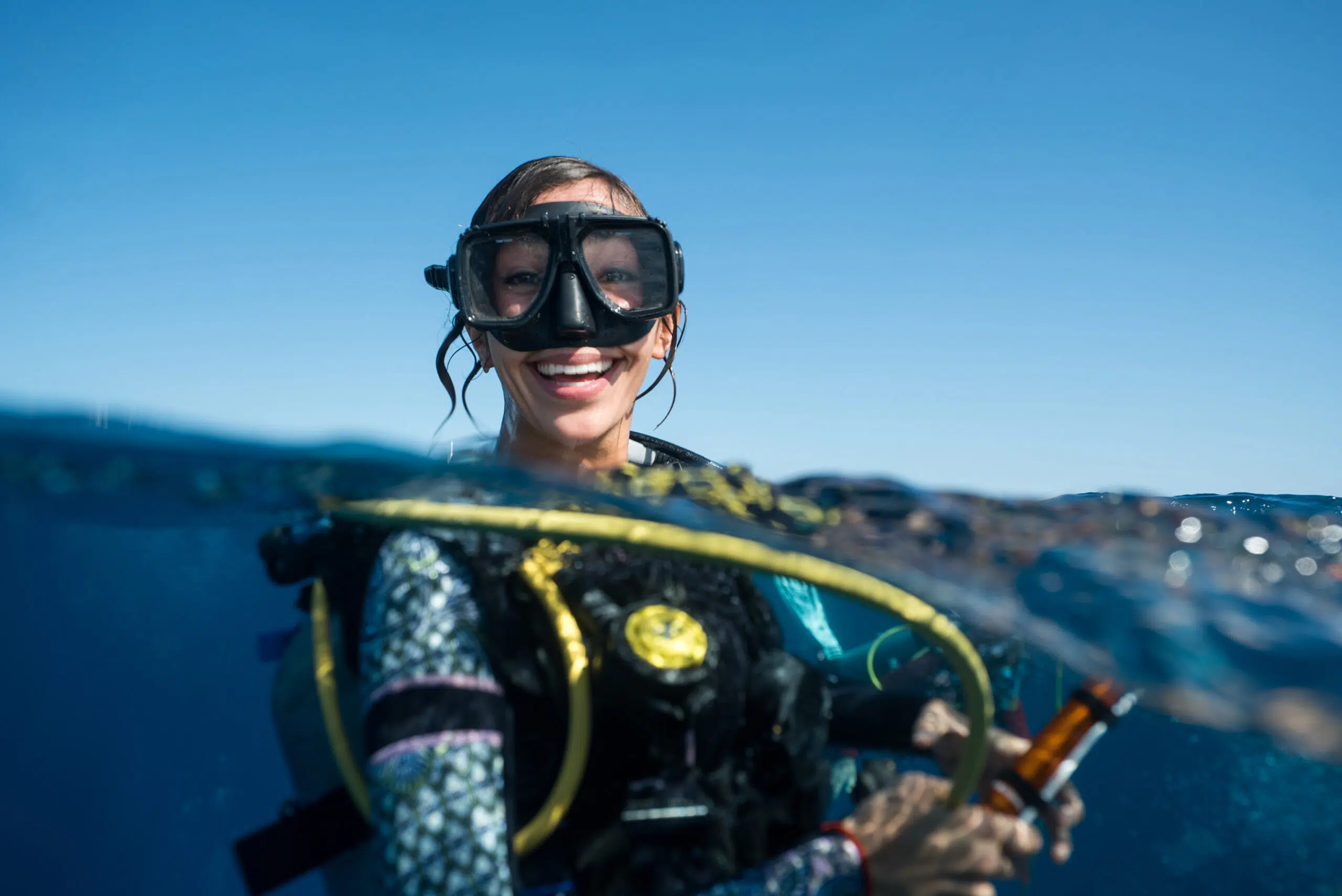
Recreational scuba diving does not disturb well-fitted Invisalign trays. The water pressure that increases with depth acts uniformly on your body and equalizes through normal techniques, leaving the thin aligner unaffected against your teeth.
Regulator mouthpieces and aligner compatibility
A standard regulator mouthpiece rests between your teeth and lips, and most divers wear aligners under it without issue. The trays add only a fraction of a millimeter of thickness, so your bite on the mouthpiece feels familiar. Some divers even notice a slightly more cushioned grip. If jaw fatigue is ever a concern, a mouthpiece sized for comfort can help.
Depth, pressure equalization, and aligner stability
As you descend, you equalize the air spaces in your ears and mask, but the aligner needs no equalizing because it holds no trapped air. The plastic and your enamel are effectively incompressible at recreational depths, so nothing shifts. Ascending is equally uneventful. The bottom line: your fit at the surface matches your fit at depth.
Dive smart in La Jolla waters.
The kelp forests and reefs off La Jolla are a diver’s paradise. Rinse your aligners with fresh water after every saltwater outing so no residue lingers, and store your case somewhere dry between dives.
Snorkeling and Water Sports While Wearing Aligners
You can keep your aligners in during snorkeling, paddleboarding, kayaking, and most ocean activities. The fit stays secure, and continuous wear protects your treatment timeline.
Keeping aligners in during ocean activities in La Jolla
Whether you are gliding over the sea caves or swimming near the tide pools, your trays stay put. Their retentive grip means no loosening from waves or currents. That reliability is one of the quiet advantages covered in 5 things nobody tells you about Invisalign clear aligners.
Rinsing and hygiene tips after saltwater exposure
Saltwater and pool chemicals can leave a film, so freshen your trays afterward. A quick rinse with lukewarm water and a gentle brush keeps them clear. For a full routine, see the easy cleaning routine your Invisalign deserves.
| Use these | Avoid these |
|---|---|
|
|
Eating and Drinking While Wearing Your Aligners on the Go
Yes, you can eat and drink while wearing your aligners, which makes travel days genuinely convenient. Staying nourished and hydrated helps you protect your wear time without interruption.
Staying hydrated during flights and dives
Cabin air and ocean sun both dry you out, so sip water regularly with your trays in place. Consistent hydration supports saliva flow, which naturally rinses your teeth and the aligner surface throughout the day. Keeping a reusable bottle nearby turns hydration into a healthy habit on any itinerary.
Maintaining wear time for on-track results
The single biggest predictor of a smooth outcome is consistent wear. Because you can enjoy food and beverages while the trays stay on, hitting 23 to 24 hours a day is easy even during a packed travel schedule. Fewer interruptions mean your teeth keep moving on plan.
| 1 | Set a wear-time reminder.
Use a phone alarm across time zones so travel never throws off your daily total. |
| 2 | Carry water everywhere Sip often on planes and boats to stay hydrated and keep your mouth fresh. |
| 3 | Refresh after each activity. Rinse your trays following meals, dives, or swims to remove any residue. |
Travel Tips to Protect Your Invisalign Treatment
Protecting your treatment on the road comes down to preparation. A little packing and a simple cleaning plan keep everything on course while you explore.
Packing spare aligners and your case
Always bring your protective case plus your current and next set of trays. If you are told your previous set is safe to reuse temporarily, pack that too. Keep them in your carry-on so nothing gets lost with checked luggage.
Cleaning routines away from home
A travel cleaning kit keeps things simple: a soft brush, mild clear soap, and a small towel. Rinse and gently clean your trays daily, mirroring the habits in the 3-minute Invisalign morning routine. Guidance on caring for clear appliances also applies to aligners per this care guide from the AAO.
What to do if a tray cracks mid-trip
If a tray cracks or splits, do not panic. Move to your next set if your schedule allows, or return to your previous set to hold your position, then contact the office. A cracked tray no longer applies even force, so replace it as soon as practical.
Keep your team a message away.
Reach out through our contact page if anything feels off. A quick photo often tells us whether you can keep going or need a new tray, and our Annual Dental Care Plan makes ongoing support easy.
When to Contact Your La Jolla Dentist
Reach out whenever a tray feels loose, sharp, or no longer seats fully. Early communication keeps small issues from delaying your results.
Signs your aligners no longer fit correctly
Watch for visible gaps between the tray and your teeth, persistent rocking, sharp edges, or a tray that will not fully seat even after a firm press. These signs suggest the current set needs attention. Our full range of care is outlined on our services page.
Staying on schedule with virtual check-ins
You do not always need to be in the chair. A quick photo or video review helps confirm you are tracking correctly, which is ideal for extended trips. La Jolla Family Smile Design offers complimentary consults, bilingual English and Spanish staff, in-office plans, and emergency availability, so support is never far. You can read our reviews or leave us a review to share your journey.
Meet Our La Jolla Dentists
La Jolla dentists Dr. Breziner, Dr. Bloch, Dr. Kandinov, and Dr. Abrahams have proudly served this community for over twenty years. Our long-term staff and loyal patients reflect a steady commitment to exceptional care, from routine hygiene to full smile redesigns. Every patient receives personalized attention across a comprehensive list of general and cosmetic services, including cleanings, fillings, root canals, implants, and dentures, with healthy smiles always the first priority. As a Diamond Invisalign Provider with a Doctor of Dental Surgery from Loma Linda University, our lead clinician has treated more than two thousand aligner cases and teaches fellow dentists across the region. You can learn more about Dr. Jaime Breziner. Patients also enjoy HDTVs and headphones in every operatory. For directions, use our map link.
Find us
Map/directions: https://maps.app.goo.gl/A8HHgmxYhr1y6nD88?output=embed
Frequently Asked Questions
No. A properly seated aligner hugs your teeth with virtually no trapped air, so cabin pressure at altitude and water pressure at recreational diving depths cannot loosen or warp it. The fit stays consistent from the surface to the sky. Just keep wearing your trays 23 to 24 hours a day so your treatment stays on schedule throughout every trip and dive you take.
Yes. You can keep your aligners in for snorkeling, scuba diving, and most water sports. A standard regulator mouthpiece fits comfortably over the trays, and the thin plastic does not interfere with your bite or breathing. Rinse your aligners with fresh water after any saltwater or pool activity to remove residue, and store them in a dry, ventilated case between sessions to keep them clean.
No. The pressure changes you feel on a plane affect sealed, air-filled spaces such as your ears and sinuses, not the thin film of plastic molded to your teeth. Since a well-fitted aligner leaves no meaningful air pocket, there is nothing for changing pressure to push against. Your trays fit the same at the gate as they do at cruising altitude, so flying is a great time to log wear hours.
Aim for 23 to 24 hours a day, even while traveling. Consistent wear is the biggest factor in staying on track, and travel days offer plenty of easy hours in the air, on boats, and between activities. Set a phone reminder that follows you across time zones so a busy itinerary never causes you to fall short of your daily target and your teeth keep moving as planned.
Yes, you can eat and drink while wearing your aligners, which is especially handy on planes and boats. This makes it simple to stay nourished and hydrated without interrupting your wear time. Sip water regularly to support saliva flow, which naturally helps keep your teeth and the tray surface fresh throughout the day. Rinse your trays afterward when you have the chance to remove any lingering residue.
If a tray cracks, stay calm. Move to your next set if your schedule allows, or return to your previous set to hold your teeth in position, then contact our office. A cracked tray no longer distributes force evenly, so it should be replaced soon. A quick photo sent through our contact page usually tells us whether you can continue or need a replacement mailed or fitted.
Remember: Keep your aligners on your teeth for 23 to 24 hours a day, stay hydrated, and rinse your trays after saltwater or pool exposure to keep treatment on track wherever you travel.
Disclaimer: This article is for general educational purposes and does not replace personalized advice. Consult a qualified dental professional and, for diving, an appropriate medical or dive authority regarding your individual situation.